General Radio Parameters Page
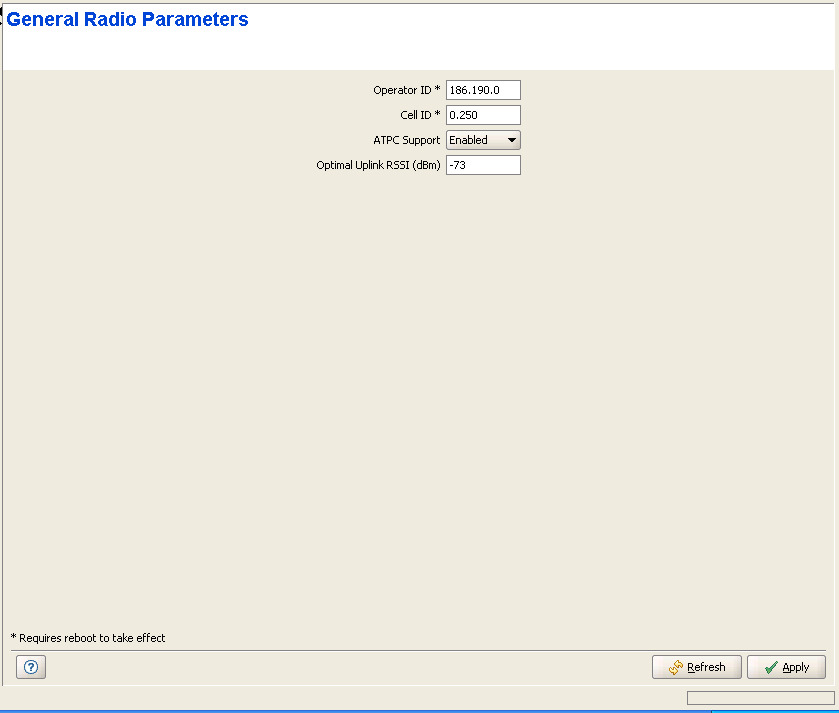
The General Radio Parameters page enables viewing and configuring the general radio parameters of the Base Station/Micro Base Station.
|
The General Radio Parameters page includes the following parameters:
Parameter |
Description |
Operator ID |
A unique identifier of the network. The same Operator ID must be defined for all Base Stations/Micro Base Stations in the network, and it should not be used by any Base Station/Micro Base Station belonging to another network in the same area. The Operator ID consists of 3 groups of up to three digits each, where the range for each group is 0 to 255. In the modular Base Station, the Operator ID parameter is used by all AUs. Updated value of the Operator ID is applied for each AU after resetting the AU (or after resetting the NPU, which causes reset of all AUs). In the Micro Base Station, a change in the value configured for the Operator ID is applied only after reset. |
Cell ID |
A unique identifier of Base Station/Micro Base Station. The same Cell ID should not be used by any other Base Station/Micro Base Station belonging to the network. The Cell ID consists of 2 groups of up to three digits each, where the range for each group is 0 to 255. In the modular Base Station, the Cell ID parameter is used by all AUs. Updated value of the Cell ID is applied for each AU after resetting the AU (or after resetting the NPU, which causes reset of all AUs). In the Micro Base Station, a change in the value configured for the Cell ID is applied only after reset. |
ATPC Support |
The ATPC Support parameter controls whether the ATPC algorithm should be used to determine current optimal transmit level for each SU served by the Base Station/Micro Base Station. The ATPC algorithm should always be enabled. The option to disable it is available to support certain tests. After each reset, the Base Station/Micro Base Station boots with the ATPC enabled, disregarding its status before the device was reset. |
Optimal Rx RSSI (dBm) |
The Optimal Uplink RSSI sets the target level at which all transmissions should be received by the AU-ODUs for optimal performance. The available range is from -103 to -60 (dBm). |
|
|

